
East Bridgewater Metal Fabrication & Welding Technology Training
Back to Programs
Apply Now
Request Information
Financial Aid
Turn Hands-On Skills Into Career Opportunities
If you enjoy building, creating, and solving practical problems, TI's Metal Fabrication & Welding Technology Training program can help you develop industry-relevant skills through hands-on laboratory instruction and experienced faculty. Whether you're starting your first career or changing professions, you'll gain practical experience that prepares you for today's manufacturing workforce.
Metal Fabrication & Joining Technologies Resources
Admission
Course Description
Program Expenses
Program Schedule
Sept to
JAN
16 weeks Program
Mon – Thu
Classes begin at 4:00 PM
East Bridgewater Metal Fabrication & Welding Technology Training | Build Industry-Ready Skilled Trades Skills at TI
If you're searching for East Bridgewater Metal Fabrication & Welding Technology Training, you're likely looking for more than a welding course—you want practical, career-focused training that prepares you for today's manufacturing and fabrication industries. At South Eastern Technical Institute (TI), students from East Bridgewater and neighboring communities have access to hands-on technical education that emphasizes precision, safety, and real-world skill development. Conveniently located in South Easton, TI has helped prepare students for technical careers throughout southeastern Massachusetts for more than 50 years.Choosing a skilled trade is often as much about finding the right learning environment as it is about selecting the right career. Many East Bridgewater residents pursue Metal Fabrication & Welding Technology because they want practical instruction delivered in a setting where they can ask questions, receive individual guidance, and steadily build confidence while mastering technical skills. For students who learn best by doing, a supportive educational experience becomes the foundation for long-term success. Whether you're near Sachem Rock Farm, Forge Pond Park, Central Square, the Satucket River, East Bridgewater Commercial Club, or Beaver Brook, students can conveniently travel to Southeastern Technical Institute (TI) while remaining connected to their community and everyday responsibilities. TI's hands-on approach allows students to develop welding and fabrication skills through instructor-guided shop projects that reinforce blueprint reading, metal preparation, layout techniques, welding processes, and quality workmanship. As technical abilities grow through consistent coaching and practical experience, students gain the confidence needed to succeed in fabrication shops, manufacturing facilities, and other skilled trade environments.
Is Metal Fabrication & Welding Technology a Good Career for People Who Enjoy Hands-On Work?
For individuals who enjoy building, repairing, creating, and solving practical problems, metal fabrication and welding offer rewarding career opportunities that combine technical knowledge with hands-on craftsmanship. Rather than spending the day behind a desk, welders and fabricators work on projects that require precision, critical thinking, and attention to detail.
Today's manufacturers rely on skilled professionals to fabricate structural components, industrial equipment, transportation systems, custom metal products, and production machinery. Modern fabrication also incorporates advanced measuring techniques, blueprint interpretation, material preparation, and quality control processes that require both technical ability and professional discipline.
Students searching for East Bridgewater Metal Fabrication & Welding Technology Training often choose this career path because it offers opportunities to:
- Develop specialized technical skills that remain in demand across multiple industries.
- Work with modern fabrication equipment and manufacturing technologies.
- Build problem-solving and precision measurement skills.
- Contribute to construction, manufacturing, and infrastructure projects.
- Pursue long-term career growth within the skilled trades.
Because fabrication skills are transferable across many industries, graduates have the flexibility to explore career opportunities throughout Massachusetts while continuing to build experience and technical expertise.
What Welding Processes and Fabrication Techniques Will I Learn?
Successful fabrication professionals understand that producing quality work involves much more than making strong welds. Every project begins with planning, accurate measurements, proper material preparation, and careful execution. At TI, students develop the foundational knowledge needed to understand the complete fabrication process while gaining practical experience in a supervised laboratory environment.
- Training introduces students to essential industry concepts including:
- Blueprint reading and fabrication drawings
- Precision measuring using industry-standard tools
- Shop mathematics and layout calculations
- Metal identification and material preparation
- Cutting, fitting, and shaping metal
- Fabrication fundamentals
- Welding theory and basic welding processes
- Grinding and finishing techniques
- Quality inspection and measurement verification
- Workplace safety and OSHA-informed shop practices
Rather than simply memorizing procedures, students learn why each step is important. Understanding how measurements, material selection, joint preparation, and fabrication sequencing affect the finished product helps students develop the critical thinking skills employers value in manufacturing and industrial settings.
Will I Train Using Professional Welding Equipment and Fabrication Tools?
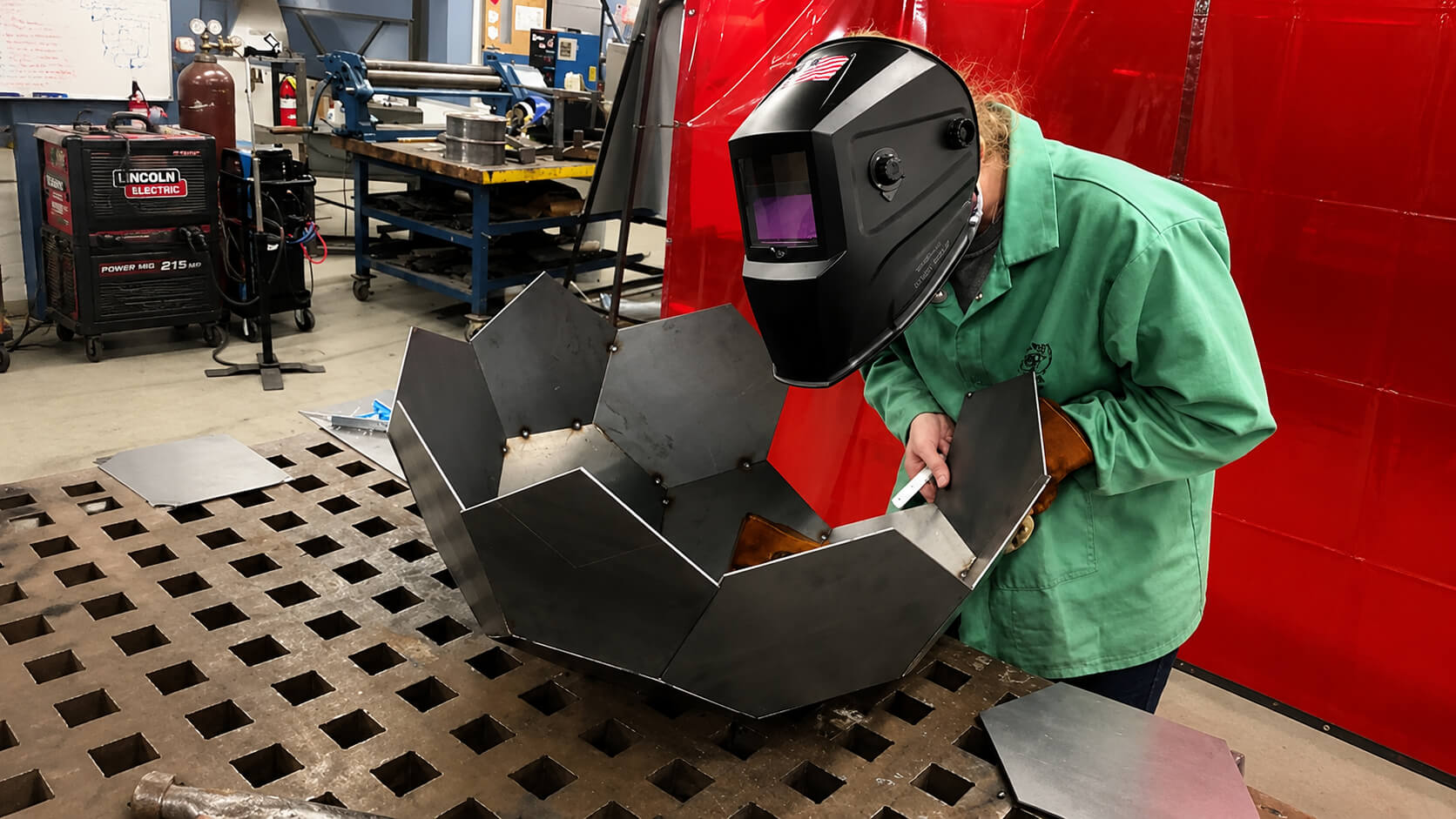
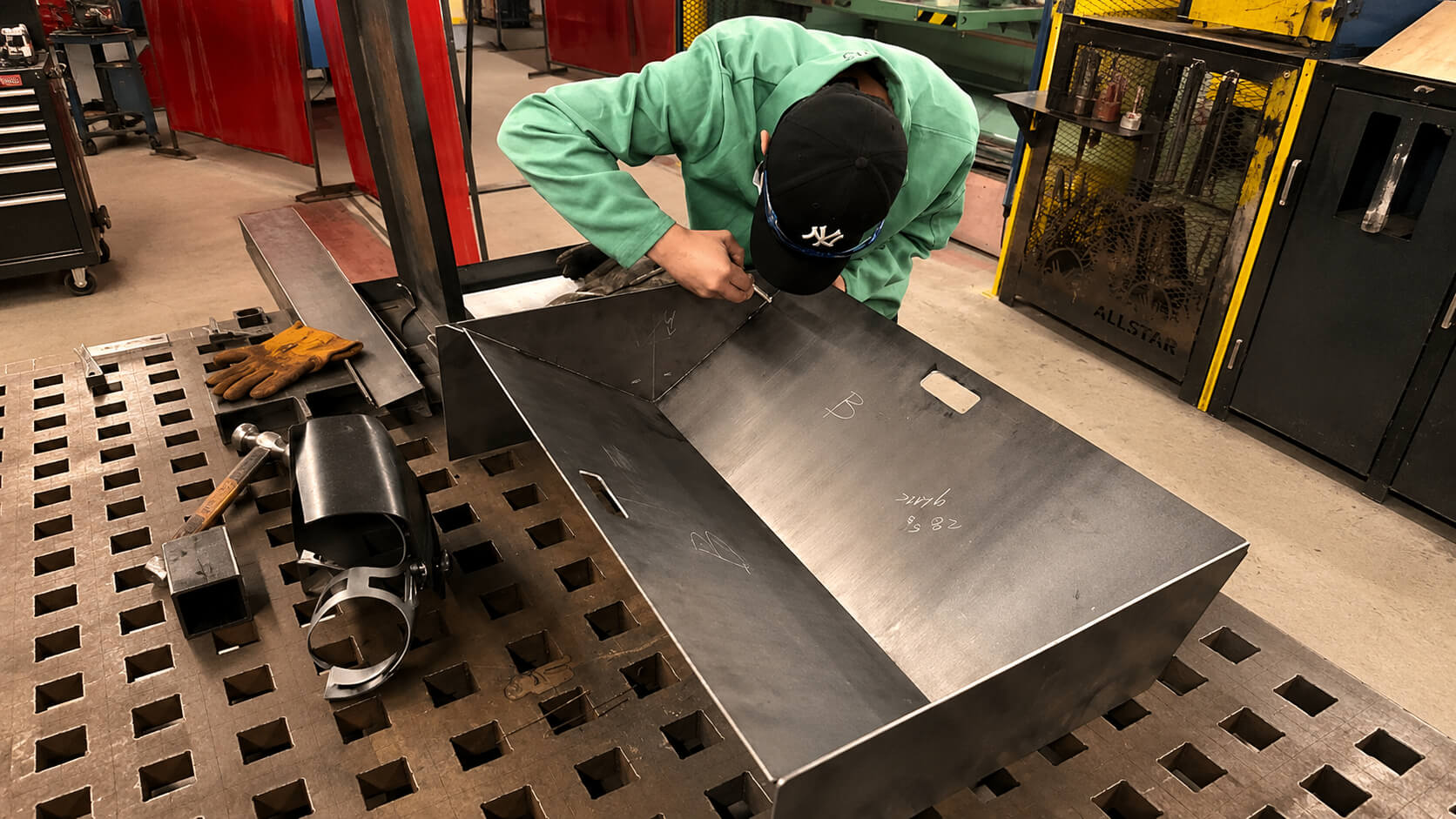
Hands-on learning is one of the most valuable aspects of technical education because it allows students to apply classroom concepts in realistic fabrication scenarios. At TI, laboratory instruction reinforces technical knowledge through instructor demonstrations, guided exercises, and progressively challenging projects that help students build confidence over time.
Students work with industry-relevant fabrication equipment and tools while learning proper equipment setup, safe operating procedures, measuring techniques, material handling, and quality inspection practices. Throughout the program, instructors provide continuous feedback that helps students improve accuracy, consistency, and overall craftsmanship.
This combination of classroom instruction and practical application helps students understand not only how fabrication techniques are performed, but why precision and consistency are essential in professional manufacturing environments. By repeatedly practicing these skills under instructor supervision, students become more comfortable working with fabrication equipment while developing habits that translate directly into the workplace.
How Important Is Welding Safety?
Safety is one of the most important responsibilities of every welding and fabrication professional. Manufacturing employers expect workers to understand workplace hazards, operate equipment responsibly, and follow established safety procedures that protect both themselves and those around them.
Throughout TI's East Bridgewater Metal Fabrication & Welding Technology Training program, students develop safe work habits from the very beginning of their training. Instruction emphasizes the importance of:
- Proper use of personal protective equipment (PPE)
- Safe operation of fabrication and welding equipment
- Hazard recognition and risk prevention
- Material handling and shop organization
- Fire prevention and workplace awareness
- Professional responsibility and safe decision-making
Students also learn that quality workmanship and workplace safety go hand in hand. Careful measurements, organized workstations, equipment inspections, and attention to detail all contribute to producing accurate work while reducing unnecessary risks. These habits help prepare graduates for the expectations found in fabrication shops, manufacturing facilities, and construction environments throughout southeastern Massachusetts.
Can Beginners Succeed in Metal Fabrication & Welding Technology Training?
Absolutely. Many students begin TI's program with little or no previous experience in welding or manufacturing. The curriculum is designed to help beginners build confidence through a structured progression of classroom instruction and hands-on laboratory practice.
Training starts with the fundamentals, allowing students to develop essential skills such as blueprint reading, precision measurement, shop safety, material preparation, and fabrication techniques before advancing to more complex projects. As students gain experience, they strengthen their technical abilities through repeated practice, instructor guidance, and practical assignments that simulate real workplace tasks.
Whether you're a recent high school graduate, changing careers, returning to the workforce, or simply looking to develop specialized technical skills, TI provides a supportive learning environment where students can progress at a steady pace while preparing for entry-level opportunities in welding, fabrication, and modern manufacturing. The emphasis on hands-on instruction ensures graduates leave with both technical knowledge and practical experience that employers recognize and value.
What Credentials Can I Prepare For?
Employers across the manufacturing and skilled trades sectors value individuals who demonstrate technical competency, safety awareness, and a commitment to producing quality work. While welding skills are developed through hands-on practice, many employers also recognize industry credentials as evidence of job readiness and professional development.
At South Eastern Technical Institute (TI), the Metal Fabrication & Welding Technology curriculum is designed to build the foundational knowledge and practical experience employers expect from entry-level technicians. Throughout the program, students strengthen their understanding of fabrication processes, blueprint interpretation, precision measurement, welding fundamentals, and workplace safety while working in supervised laboratory settings.
As an accredited public technical institution operating under the Southeastern Regional School District, TI maintains educational standards that support workforce preparation and lifelong learning. Students interested in certification opportunities or industry-recognized credentials should consult the Admissions Office for the most up-to-date information regarding program-specific pathways and career preparation.
What Industries Hire Graduates with Welding and Fabrication Skills?
Metal fabrication and welding continue to play an essential role in industries that support infrastructure, manufacturing, transportation, and commercial construction. As employers adopt advanced manufacturing technologies and modern production methods, they continue to seek individuals who can work safely, interpret technical drawings, solve fabrication challenges, and produce high-quality work.
Graduates of TI's Metal Fabrication & Welding Technology program may pursue entry-level opportunities in industries such as:
- Precision manufacturing
- Structural steel fabrication
- Commercial and residential construction
- Industrial maintenance
- Transportation equipment manufacturing
- Aerospace supply and component manufacturing
- Custom metal fabrication
- Infrastructure and public works
- Machine shops and industrial production facilities
Because welding and fabrication skills are transferable across multiple industries, graduates have the flexibility to explore diverse career opportunities while continuing to expand their technical knowledge. For residents of East Bridgewater, the town's proximity to manufacturing corridors throughout southeastern Massachusetts provides access to employers across Norfolk, Bristol, and Plymouth counties without relocating far from home.
What Types of Projects Will I Complete During Training?
Hands-on projects are one of the most valuable parts of technical education because they allow students to apply classroom knowledge in practical manufacturing scenarios. Rather than simply learning concepts through lectures, students reinforce their understanding by completing fabrication exercises that develop technical accuracy, consistency, and confidence.
Throughout the program, students participate in projects that help strengthen skills such as:
- Blueprint interpretation
- Precision measurement and layout
- Material preparation
- Cutting, fitting, and assembly
- Fabrication planning
- Quality inspection
- Safe equipment operation
- Problem-solving and workflow organization
Each project builds upon previously learned skills, allowing students to progress from foundational exercises to more advanced fabrication tasks. This structured approach helps students understand how multiple technical processes work together while developing the attention to detail expected in professional manufacturing environments.
Why Students from East Bridgewater Choose TI Metal Fabrication & Welding Technology Training
Student Success Story
An East Bridgewater resident had always been interested in working with their hands but wasn't sure whether they could succeed in a technical training program. They were looking for more than welding instruction—they wanted an educational environment where they could ask questions, learn through practice, and steadily build confidence without feeling overwhelmed by unfamiliar concepts. From the beginning of the program, instructors encouraged the student to focus on steady improvement instead of immediate perfection. Each fabrication project introduced new techniques while reinforcing previous lessons, allowing them to gradually strengthen blueprint interpretation, welding accuracy, material preparation, and problem-solving abilities. Constructive feedback after every project helped transform mistakes into learning opportunities, making technical progress both measurable and encouraging. By the time the student completed the program, their confidence had grown alongside their technical skills. They approached fabrication challenges with greater independence, communicated effectively in shop settings, and demonstrated the craftsmanship expected in professional environments. Their journey illustrates how a supportive learning experience can help students develop both the competence and self-assurance needed for long-term success in the skilled trades.
Frequently Asked Questions About East Bridgewater Metal Fabrication & Welding Technology Training
Do I need previous welding experience before enrolling?
No. The program is designed for beginners as well as individuals looking to build new technical skills. Students begin with foundational concepts such as shop safety, blueprint reading, precision measurement, and fabrication fundamentals before progressing to more advanced laboratory projects.
What technical skills will I develop during the program?
Students develop practical skills used throughout today's manufacturing industry, including blueprint interpretation, metal layout, measuring and inspection, material preparation, fabrication techniques, welding fundamentals, quality control, workplace safety, and shop mathematics.
Will I receive hands-on training using industry-relevant equipment?
Yes. Students participate in supervised laboratory instruction using professional fabrication equipment and tools. Practical projects reinforce classroom learning while helping students build confidence, technical accuracy, and safe work habits.
What types of careers can Metal Fabrication & Welding Technology graduates pursue?
Graduates may pursue entry-level opportunities in precision manufacturing, structural steel fabrication, industrial maintenance, commercial construction, transportation equipment manufacturing, custom fabrication, and other sectors that rely on skilled welding and fabrication professionals.
What careers can I pursue after completing the Culinary Arts Training Program?
Graduates may qualify for entry-level opportunities in restaurants, hotels, bakeries, catering companies, healthcare facilities, institutional dining services, and other hospitality or food service organizations. Career advancement depends on experience, employer requirements, and continued professional development.
Why is workplace safety emphasized throughout the program?
Safety is fundamental to every manufacturing environment. Students learn proper use of personal protective equipment (PPE), hazard awareness, equipment operation, material handling, and workplace organization to help prepare for professional expectations while reducing workplace risks.
Why do students from East Bridgewater choose TI?
Students appreciate TI's convenient location, more than 50 years of technical education experience, hands-on laboratory instruction, experienced faculty, and career-focused approach to preparing graduates for today's manufacturing and skilled trades workforce.
Is Metal Fabrication & Welding Technology a good long-term career?
Yes. Welding and fabrication skills remain essential across manufacturing, construction, infrastructure, transportation, and industrial production. Because these skills are transferable across many industries, graduates have opportunities to continue developing their careers as they gain experience and expand their technical expertise.
How does hands-on training prepare students for manufacturing careers?
Laboratory projects allow students to apply classroom concepts in realistic fabrication scenarios. Through repeated practice, students improve precision, technical problem-solving, equipment familiarity, and workplace confidence while developing the practical experience employers value.
Metal Fabrication & Welding Technology Training in East Bridgewater and nearby areas
Brockton Metal Fabrication & Welding Technology Training
Easton Metal Fabrication & Welding Technology Training
Stoughton Metal Fabrication & Welding Technology Training
Norton Metal Fabrication & Welding Technology Training
Mansfield Metal Fabrication & Welding Technology Training