Brockton Plumbing Training Program
Back to Programs
Apply Now
Request Information
Financial Aid
Build the Skills to Start a Career in Plumbing
Take the first step toward a hands-on career with South Eastern Technical Institute's Plumbing Training Program. Learn practical plumbing techniques, pipe installation, blueprint interpretation, system maintenance, safety practices, and industry-standard methods through real-world training designed to prepare you for entry-level opportunities. Whether you're starting a new career or building on existing construction experience, TI provides the technical foundation to help you move forward with confidence.
Plumbing Program Resources
Admission
Course Description
Program Expenses
Program Schedule
Every
JAN
750 Hours Program
Mon – Thu
4:30 PM – 9:30 PM
Brockton Plumbing Training Program | Learn the Skills That Keep Modern Plumbing Systems Running
Every home, business, school, healthcare facility, and manufacturing plant depends on safe, reliable plumbing systems. Behind every functioning water supply, drainage network, and plumbing fixture is a skilled professional who understands how these systems work together. If you're searching for a Brockton Plumbing Training Program, you're likely looking for more than technical instruction—you want practical training that helps you develop real-world skills while preparing for opportunities in one of today's most essential skilled trades.Every new neighborhood, healthcare facility, school, restaurant, and commercial building depends on properly designed plumbing systems before it can serve the public. Many Brockton residents choose Southeastern Technical Institute (TI) because they want to develop the technical skills that support the continued growth of southeastern Massachusetts while remaining close to home. Located in nearby South Easton, TI is easily accessible from communities near Brockton City Hall, Brockton Community Access, Earl B. Fish Playground, North Cary Street, Brockton South Middle School, or the Montello business district, providing students with hands-on plumbing training that prepares them for careers with residential builders, commercial contractors, facility maintenance teams, and industrial employers throughout the region.
How Modern Plumbing Systems Support Everyday Life
Most people only think about plumbing when something goes wrong, but plumbers play a critical role in protecting public health and supporting everyday life. Modern plumbing systems safely deliver clean water, remove wastewater, protect drinking water supplies, and ensure homes and commercial buildings operate efficiently.
Today's plumbers work with much more than pipes. They install water distribution systems, drainage networks, plumbing fixtures, valves, and mechanical components while ensuring systems meet safety standards and function as designed. Whether supporting new construction, renovations, or maintenance projects, plumbers combine technical knowledge with problem-solving skills to complete installations that serve communities for decades.
Students pursuing a plumbing career often enjoy working with their hands while solving practical challenges that require precision, planning, and attention to detail. These skills continue to be valuable across residential, commercial, industrial, and institutional environments.
%
TI Current Job Placement Rate
%
TI Current Completion Rate
Developing the Technical Skills Employers Value
Successful plumbers rely on a combination of technical knowledge and practical experience. At TI, students build a strong foundation by learning how complete plumbing systems function before applying those concepts through instructor-guided laboratory exercises.
Throughout the Plumbing Training Program, students develop skills in:
- Water distribution systems
- Drain, Waste, and Vent (DWV) systems
- Blueprint reading and plumbing layouts
- Pipe identification and material applications
- Plumbing mathematics and measurements
- Fixture installation principles
- Basic troubleshooting techniques
- Professional tool usage
- Workplace communication
- Safety and plumbing code awareness
Rather than simply memorizing procedures, students learn why plumbing systems are designed the way they are and how proper planning, accurate measurements, and quality workmanship contribute to reliable installations. This approach helps students understand the reasoning behind each step while developing the technical confidence employers expect from entry-level professionals.
Learning Plumbing by Solving Real-World Challenges
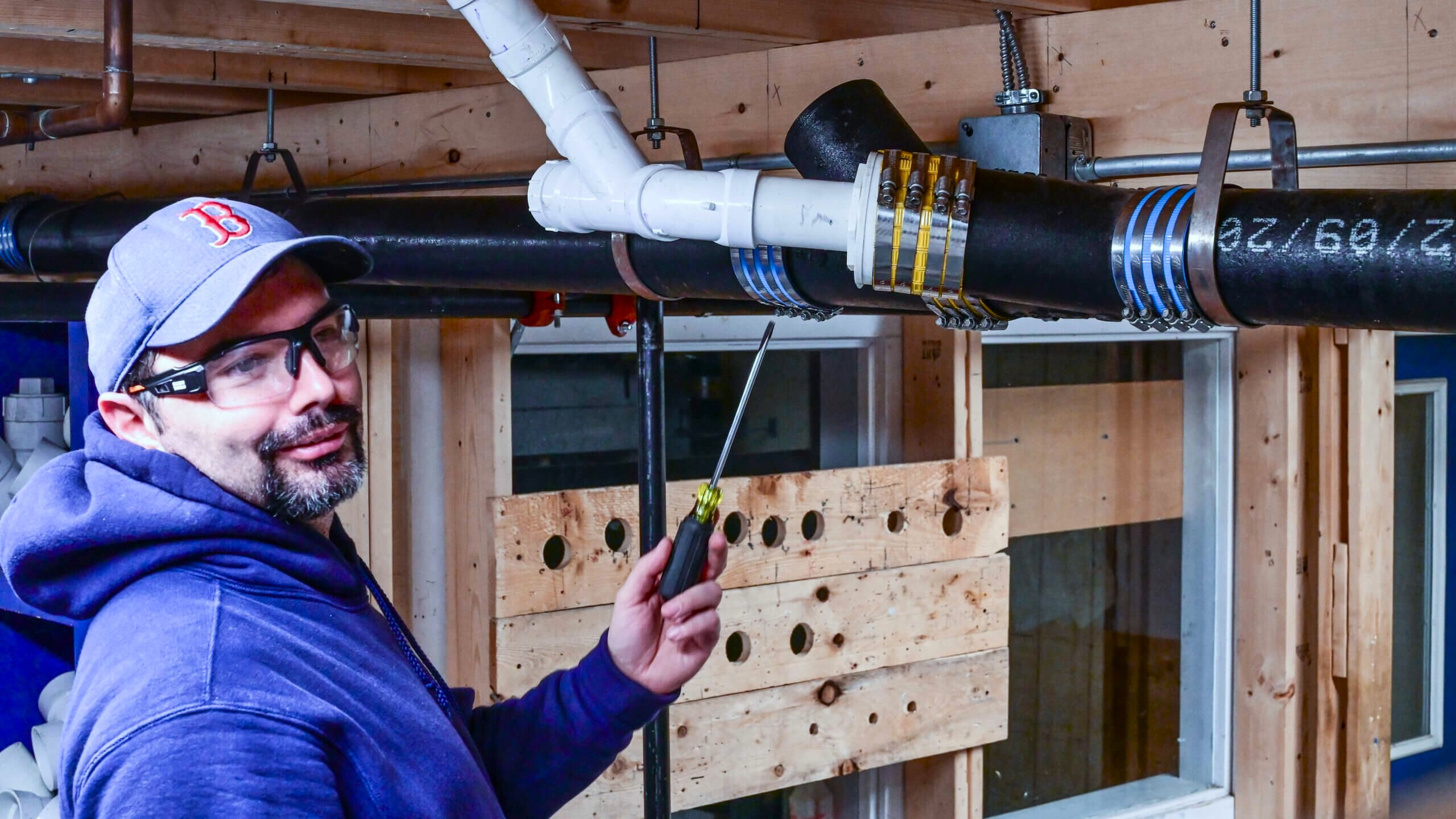
Plumbing is a hands-on profession, which is why practical experience is a central part of technical education at TI. Students reinforce classroom instruction by completing laboratory projects that simulate many of the tasks performed in residential and commercial plumbing environments.
Working under the guidance of experienced instructors, students practice measuring materials, interpreting blueprints, assembling piping systems, planning system layouts, installing plumbing components, and identifying common plumbing challenges. Each project encourages students to think critically while strengthening problem-solving abilities, technical accuracy, and attention to detail.
As students progress through increasingly complex assignments, they gain a better understanding of how water supply systems, drainage systems, and plumbing fixtures work together. Repeated practice also helps students become more comfortable using industry-relevant tools while developing the confidence to approach projects with greater precision and professionalism.
Why Plumbing Safety and Building Codes Matter
Quality plumbing begins with safe work practices and compliance with established standards. Every plumbing installation must protect the health and safety of building occupants while meeting accepted industry requirements. Understanding these responsibilities is an essential part of becoming a skilled plumbing professional.
Throughout TI's Plumbing Training Program, students develop safe work habits while learning the proper use of personal protective equipment (PPE), responsible tool handling, material preparation, workplace organization, and professional communication. Students are also introduced to plumbing code awareness and the importance of accurate measurements, careful planning, and quality workmanship throughout every stage of an installation.
By building these habits from the beginning of their education, students develop the discipline, professionalism, and attention to detail that employers consistently value throughout the plumbing industry.
Plumbing Career Opportunities Across Southeastern Massachusetts
Plumbing skills are valuable across nearly every sector of the construction and building maintenance industries. As communities continue to grow, homes are renovated, commercial buildings are modernized, and infrastructure requires ongoing maintenance, skilled plumbing professionals remain an essential part of the workforce.
Graduates of TI's Plumbing Training Program may pursue entry-level opportunities in a variety of environments, including:
- Residential plumbing and home construction
- Commercial building projects
- Property and facility maintenance
- Mechanical and plumbing contractors
- Industrial and manufacturing facilities
- Healthcare and educational institutions
- Public infrastructure and municipal services
Because plumbing systems are found in virtually every building, the skills developed through hands-on technical education provide graduates with the flexibility to explore different career paths while continuing to build experience throughout their careers.
Why Brockton Is Well Positioned for Future Plumbing Professionals
From Learning the Trade to Building a Career
Frequently Asked Questions About BrocktonMA Culinary Arts Training Program
What skills do employers look for in entry-level plumbers?
Employers value individuals who demonstrate technical knowledge, problem-solving abilities, professionalism, communication skills, attention to detail, and a strong commitment to workplace safety. Developing these qualities alongside hands-on plumbing skills helps students prepare for long-term success in the skilled trades.
What types of plumbing systems will I learn about?
Students develop foundational knowledge of water distribution systems, Drain, Waste, and Vent (DWV) systems, plumbing layouts, fixture installation principles, pipe materials, measurements, blueprint interpretation, and workplace safety while gaining practical experience through laboratory projects.
Will I receive hands-on plumbing training?
Yes. Practical laboratory instruction is a core component of the program. Students apply classroom concepts through supervised projects that reinforce measuring, system layout, piping assembly, blueprint reading, and safe tool operation.
Is this Plumbing Training Program suitable for beginners?
Absolutely. Many students begin the program without previous plumbing or construction experience. Instruction starts with foundational concepts before progressing to increasingly advanced projects, allowing students to build confidence through guided practice.
Why are plumbing codes and safety important?
Following plumbing codes and established safety practices helps protect public health, ensure reliable plumbing systems, and support quality workmanship. Throughout the program, students develop safe work habits while learning the importance of code awareness and professional responsibility.
What industries hire graduates with plumbing skills?
Graduates may pursue entry-level opportunities with residential builders, commercial contractors, property management companies, industrial facilities, healthcare organizations, educational institutions, and public infrastructure projects.
Why do students from Brockton choose TI?
Students appreciate TI's convenient location near Brockton, more than 50 years of technical education experience, accredited public institution status, experienced instructors, hands-on laboratory instruction, and career-focused approach to preparing graduates for today's skilled trades workforce.
How can hands-on training help prepare me for a plumbing career?
Hands-on training allows students to apply classroom knowledge in realistic plumbing scenarios. Through repeated practice, instructor guidance, and progressively challenging laboratory projects, students strengthen their technical skills, problem-solving abilities, and workplace confidence before entering the workforce.