Brockton
Medical Assisting
Career Training
Back to Programs
Apply Now
Request Information
Financial Aid
Begin Your Healthcare Career with Southeastern Technical Institute
Choosing the right Brockton Medical Assisting Career Training program is the first step toward building a meaningful career in healthcare. At Southeastern Technical Institute, we believe students learn best when education combines technical knowledge with practical experience and individualized support.
Medical Assisting Resources
Admission
Course Description
Program Expenses
Cost & Payment Options
Program Schedule
Every
SEPT
Full-Time Day Schedule
Mon – Fri
8:00 AM – 2:10 PM
(Clinical hours may vary)
Brockton Medical Assisting Career Training | Build a Career in Patient Care at Southeastern Technical Institute
Medical assistants play an important role in keeping busy healthcare facilities operating efficiently, making strong organizational and patient care skills more valuable than ever. Students searching for {{mpg_city}} Medical Assisting Career Training often want an education that reflects the pace and expectations of today's medical offices rather than relying solely on classroom instruction. Whether you're near D.W. Field Park, Campanelli Stadium, Westgate Mall, Downtown Brockton, or the Fuller Craft Museum, Southeastern Technical Institute (TI) provides an accessible opportunity to gain hands-on experience close to home. Students develop the clinical, administrative, and communication skills needed to thrive in fast-moving healthcare settings where teamwork, efficiency, and quality patient care are essential every day.
At Southeastern Technical Institute (TI), we've spent more than 50 years preparing students throughout southeastern Massachusetts for technical and healthcare careers. While our campus is located in South Easton, many students from Brockton choose TI because they can receive hands-on healthcare education while remaining close to home. Our Medical Assisting Career Training program is designed around the everyday responsibilities of modern medical assistants, combining clinical knowledge, administrative skills, and professional development to prepare graduates for outpatient healthcare settings. From the first day of training, we encourage students to understand not only how healthcare procedures are performed but also why they matter. Medical assistants contribute to patient safety, efficient office operations, and quality healthcare delivery, making them valuable members of today's healthcare teams.
Why Medical Assistants Are Essential to Patient Care
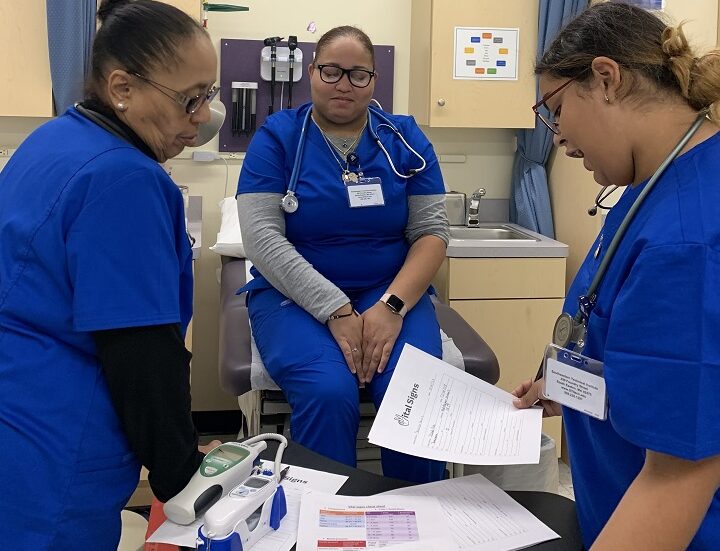
Medical assistants play an important role in helping healthcare providers deliver safe, efficient, and compassionate care. Often serving as one of the first points of contact for patients, they help create a positive experience while ensuring physicians and nurses have the information and support they need during each appointment.
A typical day may include welcoming patients, reviewing medical histories, measuring vital signs, preparing examination rooms, documenting patient information, assisting during routine procedures, and coordinating follow-up appointments. Because medical assistants perform both clinical and administrative responsibilities, they help improve communication, maintain organized workflows, and contribute to a positive healthcare experience for patients and providers alike.
This combination of patient interaction, clinical support, and office coordination makes medical assisting an excellent career choice for individuals who enjoy helping others while working in a fast-paced healthcare environment.
Inside the Medical Assisting Lab
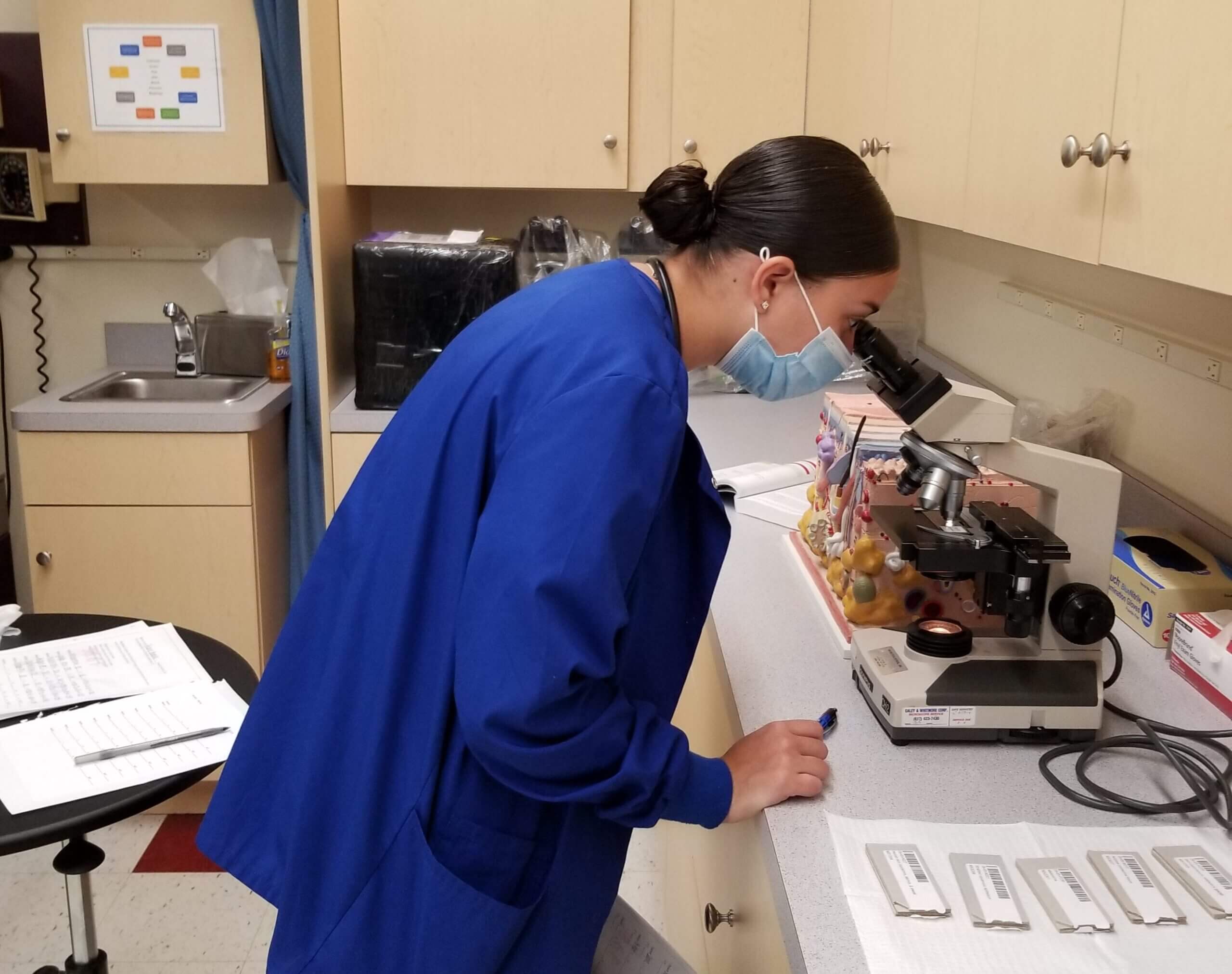
Healthcare skills are developed through practice, observation, and continuous feedback. That's why hands-on laboratory instruction is a central part of TI's Brockton Medical Assisting Career Training program.
Students apply classroom knowledge in a supervised clinical environment designed to reflect the workflow of an outpatient medical office. As they progress through the program, they practice preparing examination rooms, measuring vital signs, maintaining infection prevention standards, documenting patient information, and assisting with routine clinical procedures using industry-relevant equipment.
Our instructors work closely with students throughout each laboratory session, providing individualized feedback that helps improve technique, build confidence, and reinforce professional standards. We believe that repetition and guided practice are essential because technical skills become more effective when students understand not only how to perform them, but also why they contribute to safe, efficient, and compassionate patient care.
What You'll Learn During Medical Assisting Career Training
Every lesson in TI's Brockton Medical Assisting Career Training program is designed to prepare students for the responsibilities they will encounter in real healthcare environments. Rather than simply introducing medical procedures, we explain why each skill is important and provide opportunities to apply that knowledge through hands-on instruction.
Students begin by developing a strong understanding of the core concepts that support safe and effective patient care.
Vital Signs and Patient Assessment
Measuring blood pressure, pulse, temperature, and respiration is often one of the first clinical skills students learn. These measurements provide healthcare providers with valuable information about a patient's condition and help guide clinical decision-making. Throughout the program, students practice these procedures repeatedly because accuracy and consistency are essential in every healthcare setting.
Medical Terminology and Communication
Healthcare professionals rely on standardized medical terminology to communicate clearly and accurately. Students learn the language of medicine while developing the communication skills needed to interact professionally with patients, physicians, nurses, and other members of the healthcare team. Building confidence in both technical language and interpersonal communication helps prepare students for the collaborative nature of modern healthcare.
%
Current percentage for job placement 2024
%
Cumulative Average for Exam Passage for 2020-2024
How TI's Medical Assisting Career Training Prepares Future Healthcare Professionals
Preparing students for healthcare careers requires more than teaching individual procedures. At TI, we focus on helping students understand how every skill contributes to patient care, workplace safety, and the daily operation of a medical office.
Throughout our Brockton Medical Assisting Career Training program, students combine classroom learning with instructor-guided laboratory experiences that reinforce professional expectations. Small class sizes allow instructors to provide individualized feedback while helping students develop confidence, technical accuracy, and critical thinking.
Our program emphasizes three essential areas of professional development:
Clinical Knowledge
Students learn the foundational healthcare concepts needed to assist physicians and support patient care safely and effectively. Understanding medical terminology, infection prevention, anatomy, and clinical procedures provides the framework for performing daily responsibilities in outpatient healthcare settings.
Administrative Skills
Modern medical assistants play an important role in keeping healthcare offices organized. Students develop practical experience with appointment scheduling, electronic health records, medical documentation, and professional communication because efficient administrative systems contribute directly to quality patient care.
Professionalism
Healthcare employers value medical assistants who demonstrate reliability, teamwork, confidentiality, and compassion. Throughout the program, instructors reinforce these workplace expectations while helping students build the confidence needed to communicate professionally with patients, coworkers, and healthcare providers.
A Day in the Life of a Medical Assistant
One of the reasons many students choose medical assisting is the variety each workday offers. Medical assistants support both patients and healthcare providers while helping medical offices operate efficiently.
A typical day may begin by preparing examination rooms, reviewing appointment schedules, and organizing equipment before patients arrive. Throughout the day, medical assistants often greet patients, update medical histories, measure vital signs, document information in electronic health records, and assist healthcare providers during routine examinations and procedures.
Between patient visits, they help maintain clinical cleanliness, prepare examination areas for the next appointment, and communicate with patients regarding scheduling or follow-up instructions. Every responsibility contributes to a positive patient experience while allowing physicians and other healthcare professionals to focus on delivering quality care.
Understanding this daily workflow helps students appreciate how organization, communication, attention to detail, and professionalism all contribute to successful healthcare delivery.
A Day in the Life of a Medical Assistant
Students from Brockton often choose Southeastern Technical Institute (TI) because they want to prepare for careers in one of southeastern Massachusetts' most active healthcare markets. Rather than viewing medical assisting as simply a job, many see it as an opportunity to establish a long-term professional future in a community served by hospitals, specialty practices, urgent care centers, and physician offices. TI helps students develop the practical skills needed to compete for those opportunities while remaining close to the region where they hope to build their careers. Whether you're near Brockton Hospital School of Nursing, Montello MBTA Station, the Brockton Area Transit Authority Intermodal Centre, City Park, the Curtis Building, or the Brockton Public Library, commuting to TI allows students to stay connected to the community where many plan to begin their healthcare careers and establish professional relationships after graduation. Through instructor-led laboratory training, real-world clinical experiences, and career-focused education, students develop the technical abilities, adaptability, and professional confidence employers expect from today's medical assistants. Graduates leave prepared to contribute effectively in a wide variety of healthcare settings while continuing to grow within Brockton's expanding healthcare community.
How Students Build Professional Medical Assisting Skills in Brockton
Why Healthcare Employers Value Medical Assistants
Healthcare employers look for professionals who can contribute to both patient care and the daily efficiency of a medical practice. Technical ability is important, but employers also value communication, professionalism, reliability, and a commitment to patient safety.
Throughout TI's Medical Assisting Career Training program, we emphasize these workplace expectations alongside clinical instruction. Students learn that every interaction with a patient requires professionalism, compassion, confidentiality, and attention to detail. By combining technical knowledge with strong interpersonal skills, graduates are better prepared to adapt to the collaborative nature of modern healthcare environments.
This balanced approach helps students understand that becoming a successful medical assistant involves continuous learning, teamwork, and a commitment to providing high-quality patient care.
Frequently Asked Questions About Brockton Medical Assisting Career Training
Do I need previous healthcare experience?
No. Our Brockton Medical Assisting Career Training program is designed for beginners, career changers, and anyone interested in building the skills needed to begin a healthcare career.
Will I receive hands-on clinical training?
Yes. Students participate in instructor-guided laboratory experiences that reinforce classroom instruction while helping develop confidence in both clinical and administrative responsibilities.
Why are communication skills important for medical assistants?
Medical assistants interact with patients, physicians, nurses, and administrative staff every day. Clear, professional communication helps improve patient experiences, supports teamwork, and contributes to the efficient operation of healthcare practices.
What skills will I develop during the program?
Students develop knowledge in patient care, medical terminology, vital signs, infection prevention, electronic health records, medical office procedures, and professional communication while strengthening the workplace skills healthcare employers value.
Why do students from Brockton choose TI?
Students choose TI because they can receive career-focused healthcare education close to home while benefiting from experienced instructors, hands-on laboratory instruction, small class sizes, and more than 50 years of workforce-focused technical education.
Medical Assisting Program Approval & Accreditation
Southeastern Technical Institute
is accredited by the Commission of the Council on Occupational Education
7840 Roswell Road, Building 300, Suite 325 Atlanta, GA 30350
www.council.org
770.396.3898
Massachusetts Department of Elementary & Secondary Education
75 Pleasant Street
Malden, MA 02148-4906
www.doe.mass.edu
781.338.3000
Commission on Accreditation of Allied Health Education Programs
9355 – 113th St. N, #7709
Seminole, FL 33775-7709
www.caahep.org
727-210-2350